Insights / The Audit Ready Brief
The Audit Ready Brief, Part 1 of 6
Where audit prep time actually goes
By James T. Porter, Executive Director, Aegis Technologies Inc.
Part 1 of 6. Over the next twelve weeks this newsletter works through an AS9100D audit the way an auditor does: one thread at a time, with the questions they ask and the evidence that answers them.
Ask a quality manager what they did in the three weeks before their last surveillance audit and you'll rarely hear "fixed things". You'll hear "found things".
Audit preparation can cost a quality team hundreds of engineering hours. Very little of it is spent correcting the system. Most of it goes on assembling proof that the system works: pulling records clause by clause, chasing the people who hold them, reconciling counts that don't agree, and building a binder that nobody will read in full.
That's worth understanding, because it tells you where the leverage is.
The records usually exist
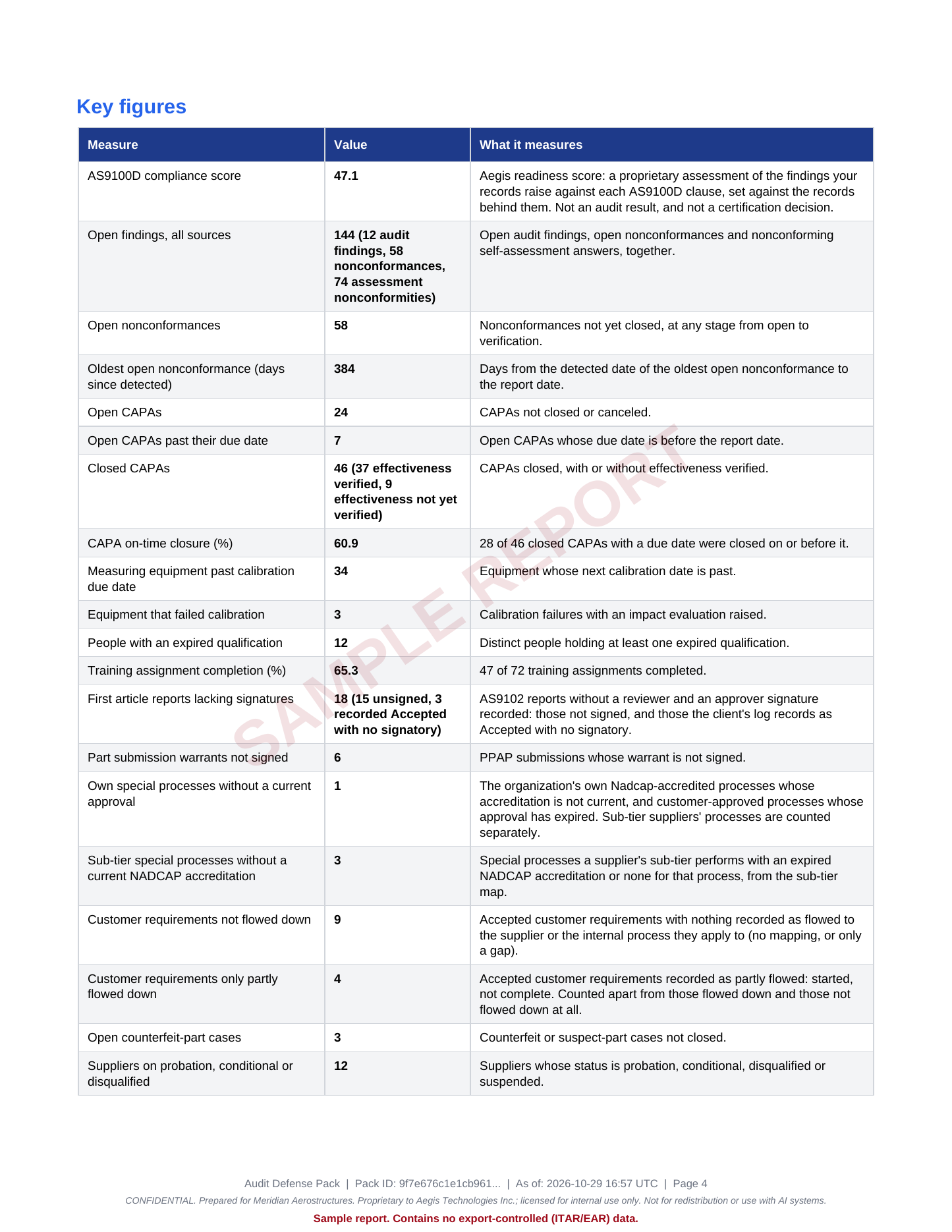
In most AS9100 shops the underlying records are there. There's a CAPA log, a nonconformance log, a calibration list, a training matrix, a supplier list, a document register and last year's audit findings. They live in different spreadsheets and systems, kept by different people, updated at different rhythms.
The trouble isn't absence. It's that nobody sees them side by side until an auditor lines them up.
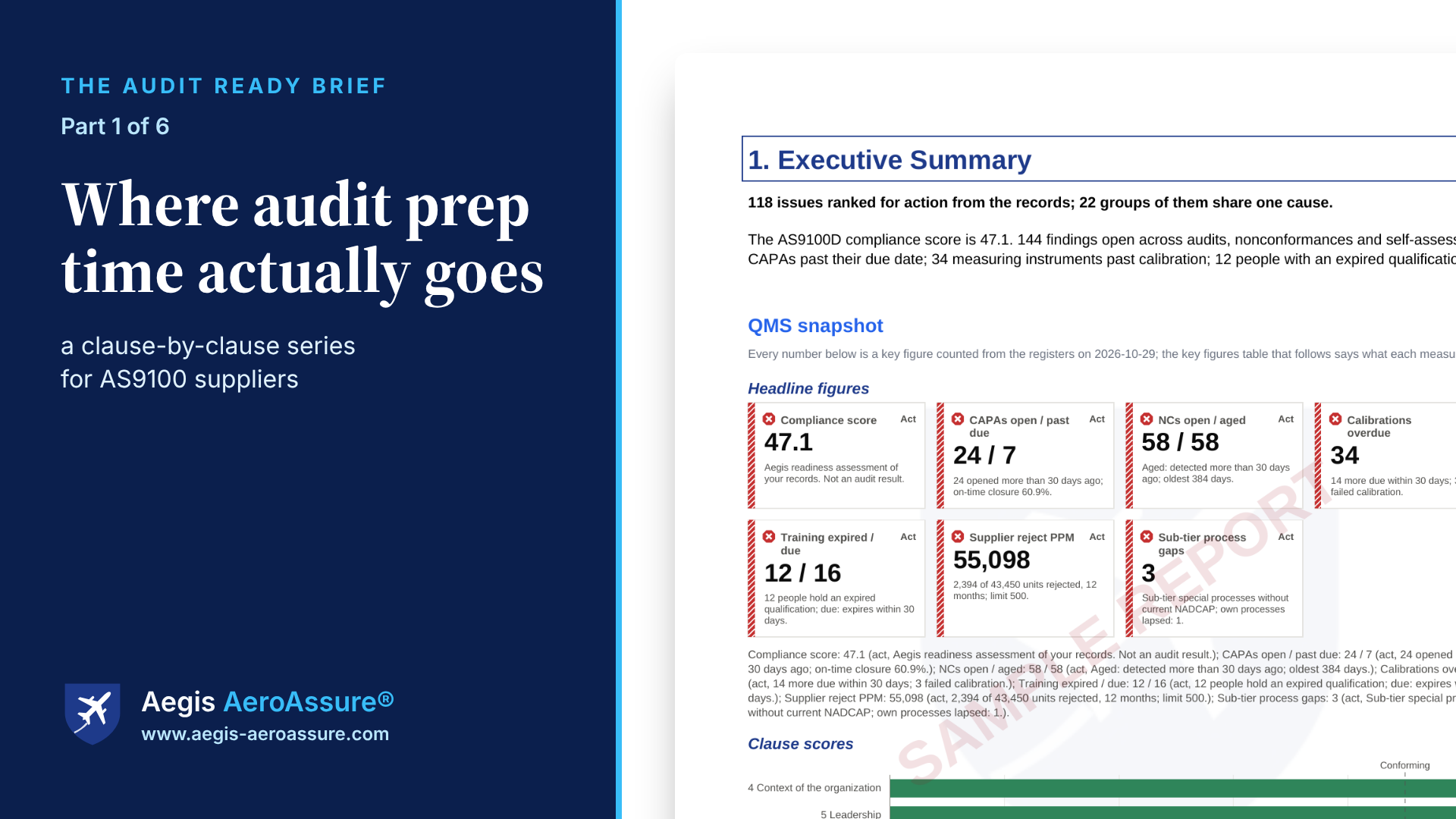
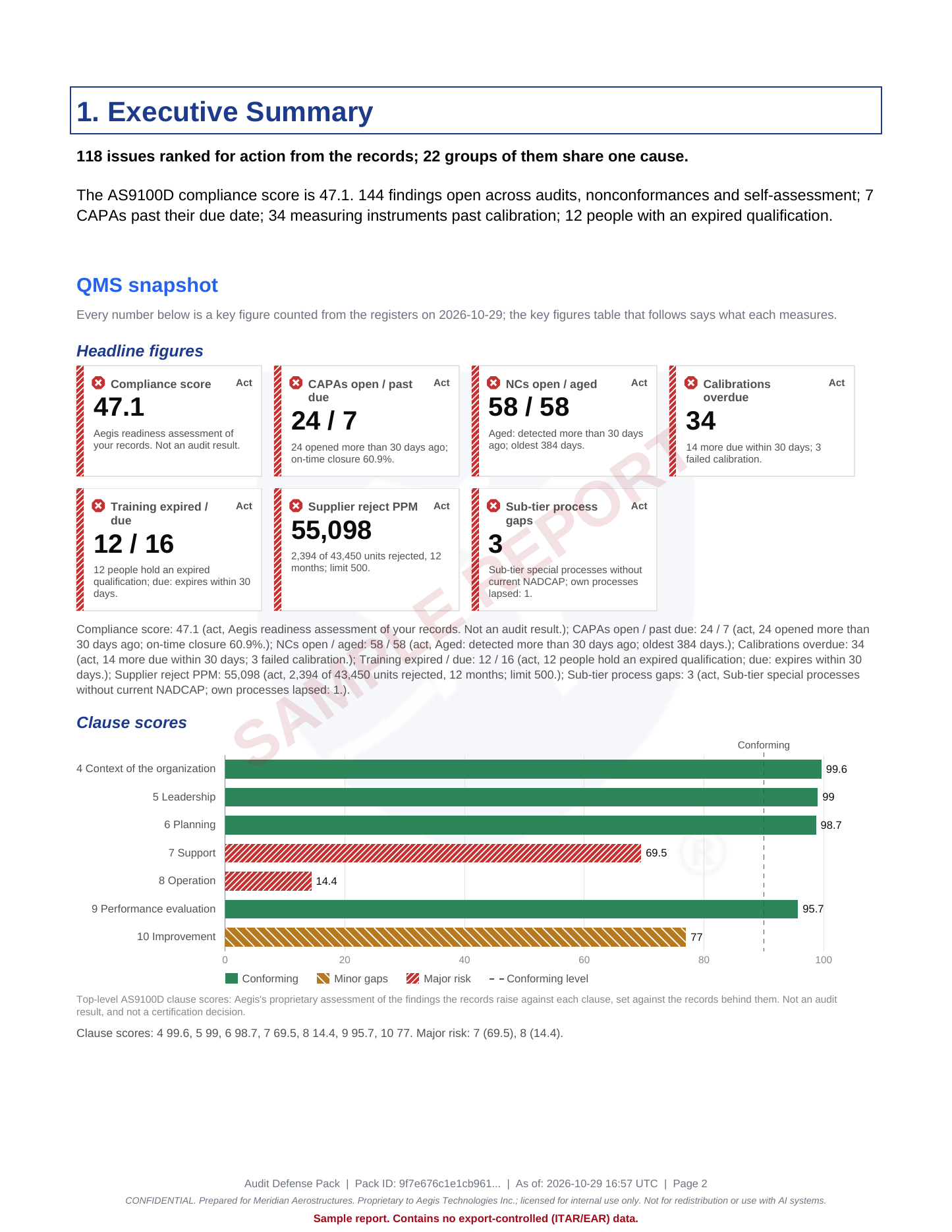
When we built the sample plant for the Aegis AeroAssure Audit Defense Pack (an aerostructures supplier in trouble, with a full set of quality registers), the first thing we did was put every register next to every other one. The result was 181 open findings across audits, nonconformances and the plant's self-assessment. Sorted by date, that reads like a crisis.
Sorted by part, supplier, gauge and owner, the picture changed. The pack ranked 118 issues for action, and 22 groups of those shared a single cause.
Findings travel in groups
Auditors know this. It's why a good auditor follows threads rather than clauses. They pick one nonconformance and pull on it:
- Which part was it? Has that part had other problems?
- Which gauge measured it? Is that gauge in calibration, and was it when it measured these parts?
- Who inspected it? Were they qualified on that date?
- Which supplier's material was it? What's that supplier's status?
Each question moves to a different register. If the answers are consistent and quick, the thread ends. If they aren't, the auditor has found a finding, and usually three more behind it.
In the sample plant, one part carried five findings across its planning, first article and receiving records, among them high-priority failure modes missing from the control plan and a first article report without its signatures. Five owners would each have closed their own item. The real question was asked once: should this part have been released?
Where to spend the hours instead
If most preparation time goes on finding and assembling, the most useful thing you can do early is make the finding cheap. Three habits help more than any binder.
1. Sort open findings by cause, not by date. Once a month, group every open nonconformance, CAPA and audit finding by part, supplier, gauge and owner. Clusters show you where one action will close several items, and they show you the story an auditor will tell.
2. Keep one line of status on anything old. Any nonconformance or CAPA open more than 60 days gets one line, updated monthly: what it's waiting for, who's chasing it, and the next date. The oldest open nonconformance in our sample plant was 384 days old. The auditor doesn't mind that it's waiting. They mind that nobody can say what for.
3. Reconcile your counts. If the CAPA log says 47 open and the dashboard says 52, an auditor will spend twenty minutes finding out why, and you'll spend them explaining. One summary, computed one way, used everywhere.
What the series covers
Each issue takes one audit thread:
- Where audit prep time goes (this issue)
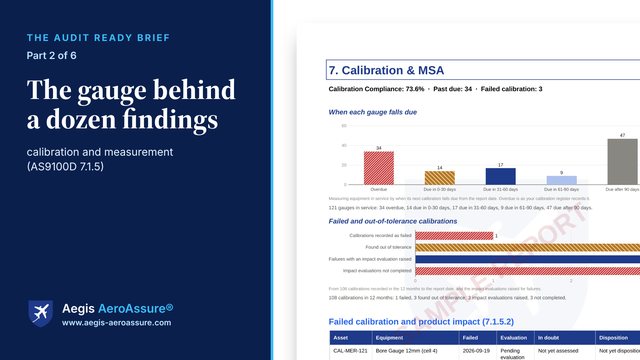
- Calibration and measurement: the gauge behind a dozen findings (7.1.5)
- Suppliers and special processes: approved lists, re-evaluation, NADCAP below your direct supplier (8.4)
- Nonconformance, containment and corrective action: what "contained" and "closed" have to mean (8.7, 10.2)
- First article, traceability and counterfeit parts: walking a part back to the mill (AS9102, 8.5.2, 8.1.4)
- Audit week and the year ahead: internal audits, management review, and planning 2027 (9.2, 9.3)
Each ends with the questions an auditor asks for that thread, taken from our audit question bank of 252 questions, with the evidence to have ready and the red flags they look for.
About the Audit Defense Pack
This newsletter stands on its own. If you want the whole picture for your own plant, the Audit Defense Pack starts from the records you already keep, exported to spreadsheets, and delivers a clause-by-clause AS9100D readiness report, a ranked action plan with named owners, and an auditor's checklist for every clause where your records show a gap. It's delivered within five business days of complete data and reviewed by an aerospace quality professional before release. It isn't a certification or a registrar audit. It shows you where you stand before one.
Sample reports: www.aegis-aeroassure.com
Next issue: the calibration finding that isn't about calibration.
Also on LinkedIn: The AS9100 Transition File, a weekly newsletter on what the IA9100 draft changes and the records in your shop that will carry it (IA9100 is not yet final). New issues are shared on James T. Porter's profile: linkedin.com/in/james-t-porter